


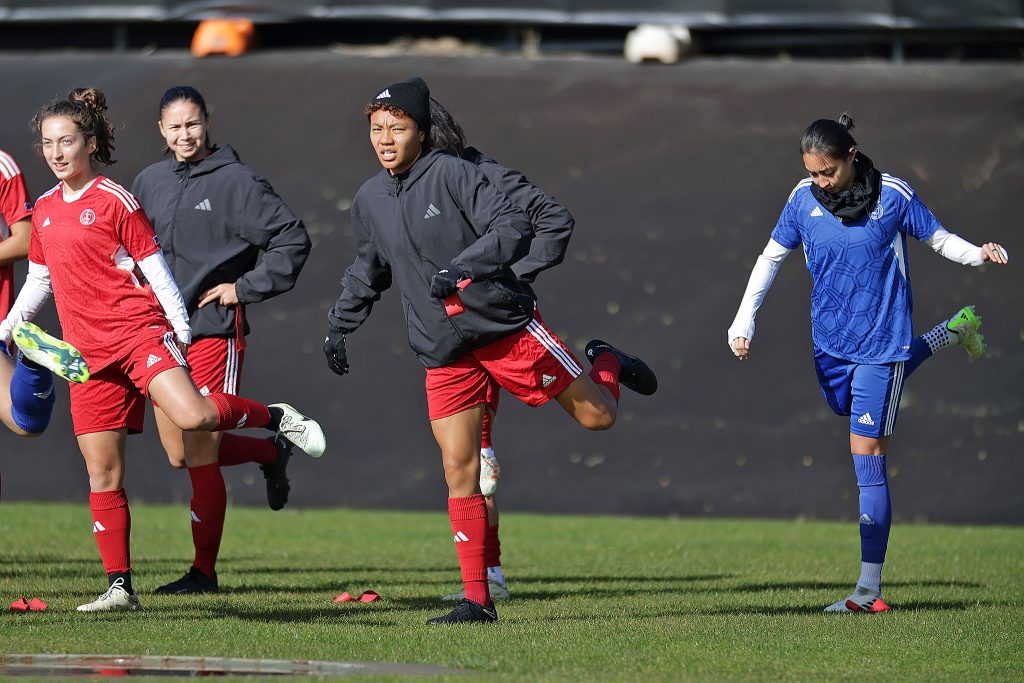
I was supposed to write my overall take on the Filipinas’ performance in the World Cup, but grassroots organizer Roy Moore has summed it all up in a comprehensive, forward-looking assessment. It’s best for the reader to visit his blog first.
So I will go deeper on my personal take. For starters it must be understood that football mastery is 80 per cent muscle memory and 20 per cent strategy, tactics, and in-game adjustments by the manager. Yes, we have a world class manager in Staj, who is now leaving the team, but we remain to lack a comprehensive grassroots program that hones pre-school toddlers (5-to-7 years old) the fundamentals, mechanics, and basic tactics of football.
I have read assessments that we are lacking in ball protection especially in the midfield, on top of passing accuracy in the buildup, hence, we heavily rely on chances at set pieces or counterattacks from compact (parking the bus) defense against higher-ranked opposition. Then in the pivotal match versus Norway, where a ticket to the knockouts is at stake, Filipinas manager Alen Stajcic forced the pace and, with balls of steel, started the team with a 4-3-3 formation, with the intention to beat Norway’s perceived weakness on defense. But Norway is not the world number 12 for nothing–this is a country that has a strong football culture and program among women. In the end, we have just hit puberty in our World Cup debut while Norway has been adulting since the very first World Cup.
There is feedback that we rely heavily on Fil-foreign recruits and that is hard to maintain on the long term and yes, that’s true. But that is necessary in this stage of developing our local football culture.
You know when was the last time the Filipinas lost by six goals? Against Myanmar in the 2017 SEA Games. That team only had one Fil-foreigner in captain Hali Long and two foreign-raised Filipinos in Eva Madarang and current assistant coach Patrice Impelido. The rest of the team were homegrown. That only shows the disparity in talent between the foreign-based and homegrown talents precisely because these countries enjoy advanced coaching, training, nutrition, logistics, and an overall mainstream football culture, especially among their women.
Our homegrown players during that time and even today are varsity-based who honed their talents at school age. A lot of our girls are also not tall enough to excel in volleyball (the Philippines’ most popular sport for women), hence, they play football.
Teaching pre-school kids football is optimal to build their muscle memory in the sport and for them to love this sport instead of being late bloomers, just because they were inspired by the Filipinas or they were recruited to the school varsity. What the Filipinas should inspire are our football movers who are at a position to build a comprehensive grassroots program. Pre-school kids will play any game because they are kids, so why not make football more mainstream to them than lato-lato?
However, a lot of girls, especially from working class background, are forced to imagine a mundane life where they could earn money for the survival of their families instead of pursuing a sport that offers no financial stability, unlike in volleyball (or basketball/boxing/billiards for men). And their burden is twofold come adulthood—the burden of having a paying job to survive and the need to accomplish reproductive/care work to nurture the young. It is thus incredibly challenging for the Philippine Football Federation (and even altruistic organizers like Moore), to build, much more sustain such grassroots program on a national scale. And how can we build that football “muscle memory” on these kids if half of their brains are preoccupied about survival?
Ultimately, the primordial “elephant in the room” must be addressed—solving poverty. And this is where the State plays an integral role. We can’t just rely on the Herculean but very limited efforts of foundations like Tuloy and Fairplay, or individual efforts from a number of coaches, or even the scarce resources of PFF, PSC, or private sponsors, to train these kids.
If the State could craft policies to solve poverty (abolition of contractualization, living wage on a national, not regional scale that discriminates workers from provinces, and genuine agrarian reform) and mobilize resources (for livelihood, mass housing, healthcare, nutrition, social services, and education) to assure a dignified life for the kids and parents in the grassroots, then we could build a very conducive atmosphere to develop football locally. And even better, we could build that huge advantage of fusing our empowered grassroots with the products of our overseas diaspora.
Ever wonder why the likes of Switzerland and Norway—and Japan, Sweden, Netherlands in the other groups—play much, much better than our Filipinas? Because their governments do not allow their grassroots to be pauperized. Our World Cup dream will be a permanent reality if we address poverty.
The question though: Is our current government up to that task?
* * *
